Welcoming Visitors to Silwan
my whole heart!
my whole heart!

here is the most recently completed community mural in the village of Umm al-Khair. located in Masafer Yatta in the West Bank, the people who live here face the threat of dispossession and forced expulsion daily. activist and community leader Awdah al-Hathaleen and I partnered to envision with his village a mural representative of the traditions of Palestinian resistance and Bedouin culture. it is painted in the area of the new guesthouse where activists in solidarity can come to stay, understand what's happening and tangibly support Umm al-Khair. in the mural we included quotes from Palestinians and others to speak to the collective struggle for liberation - including Mahmoud Darwish, Patrisse Khan-Cullors, Shireen Abu Akleh, Malcolm X, Ghassan Kanafani and Awdah al-Hathaleen. I hope for you to visit Umm al-Khair and see how art is one way to resist and share the resilience of a community in spite of the reality.
some thanks is due! I was so happy for any and all community members, including children, to have contributed to the painting of this mural and making it their own - a big thank you for joining in. thank you Awdah for initiating this project and trusting in me. thank you Ouijah for your vigilance and hard work! thank you Imm Salem and Hanady for your utmost hospitality. thank you to all of the women that fed us and kept us sustained as we worked. thank you Hashem, Kezia, Majdi and the Hineinu crew for supporting and painting with us as well. thank you to all others who donated to see this mural happen - Osama, Eden, Noah, Katie, John, Emet, molly and Arielle.
we have hopes to continue utilizing art as a powerful tool of engagement and resistance in the future! if you are interested to support or become involved, reach out to me.
شكرًا كتير ❤️
#freepalestine #artasresistance #murals #endapartheid #endtheoccupation #masaferyatta #ummalkhair #palestine #art

. . . from Mahmoud Darwish’s poem “Innocent Villagers.” Darwish’s portrait is painted here by our team member Susan, on a remaining wall of the half-demolished home of the Rajibi family in the neighborhood of Ayin a-Loza in Silwan. These Palestinian homes exist just on the outskirts of the Old City of Jerusalem, but no one sees them – or rather, no one wants to see them. The regime attempts to hide them from view – to push them out and raze the evidence, blowing them away like smoke. And then it brings strangers to these ancient places, showing them a lie, claiming something new as old. But such a facade cannot erase a people so resilient, who retaliates with bright color amid the rubble saying, ‘We’re here and we’re still growing here. You may attempt to throw our seedlings away from here and across the world but we maintain our ancestral knowledge – our roots in this land will bring them back.’

mural painted on the home of mother nasser, one of the kindest elders of the neighborhood in batn al-hawa. personally, she has shown me such love. and it's apparent for her children, grandchildren and great-children. she likens us to daughters. bless her story of tomorrow. bless her hands, and bless her blessings
Bai Bibyaon Ligkayan Bigkay is the first and only chieftain of the Lumad people, indigenous to the land of the Davao Region in the Philippines. she is an environmentalist and advocate for indigenous peoples' rights. she is a long defender of her people's ancestral lands, including the Pantaron Mountain Range, from Duterte's military occupation on such lands to exploit their natural resources. yet, the 80-something year old Bai Bibyaon remains a stronf leader, and has expressed her high spirit to continue the fight, as well as her faithfulness in the younger generations of the Lumad community.


yesterday, in spite of a business strike in East Jerusalem, we felt it was our obligation to be present for our Palestinian-led and centered project I Witness Silwan - to be there as a presence for the community of Batan al-Hawa, and to document any human rights violations and violence should they occur by the Israeli Occupation Forces (IOF) during a time where Israeli institutions weaponize the Jewish religion to promote Zionism and the ethnic cleansing of Palestinians through a settler-colonialist project made specifically and exclusively for the supremacy of European secular Jews. I cannot go into all of the context here, and there are many layers and nuances. but as an Ashkenazi Jew ethnically, I unequivocally oppose the apartheid regime that is the Isra*li state and demand the liberation of Palestine and Palestinians right of return. Jewish liberation does not come through the suppression of Palestinian liberation. we are not free until we are all free.
anyway, yesterday, during the Jewish holiday of Sukkot, settler organizations flooded Palestinian neighborhoods with settler-tourists and the occupation forces - namely, the border police - to personally escort and 'guard' those settlers as they promoted their own historical narrative and neglected any recognition of Palestinian heritage. our murals are a protest to such propaganda, and yesterday we began a new mural with the Palestinian children of Batan al-Hawa in the face of the occupation, with hundreds of settlers and soldiers flocking the streets of their neighborhood. for them, painting represents resistance, resilience and a glimmer of hope. it gives them some bit of autonomy over their homes in which the state tries to mold, and take from them.
at one point in the afternoon, the occupation forces entered a private stairwell in the neighborhood and began to invade homes and harass the residents. I filmed the commotion as the IOF ordered people to vacate the streets and enter their homes. all this as they point rubber bullet guns at civilians, including many children running around the neighborhood. two soldiers cornered me where I was filming, after the female had pushed me, and they tried to force me inside the home. I'm glad the door was locked because they could have tried to search the home for no reason, and intimidate the children inside. they pressured me and sprayed tear gas, I managed to slip away and the female soldier pushed me onto a parked car. as I went away I had difficulty to breathing, and as I was still trying to catch my breath more commotion broke out. the soldiers were trying to invade another residence and I began filming again. the same two soldiers who assaulted me previously saw me and strode toward me, the female told me to stop filming and I hid my phone so she would not take it. she pushed me with a lot of force in the chest and grabbed my neck. I managed to stay calm and keep the documentation, and الحمدلله I am fine.
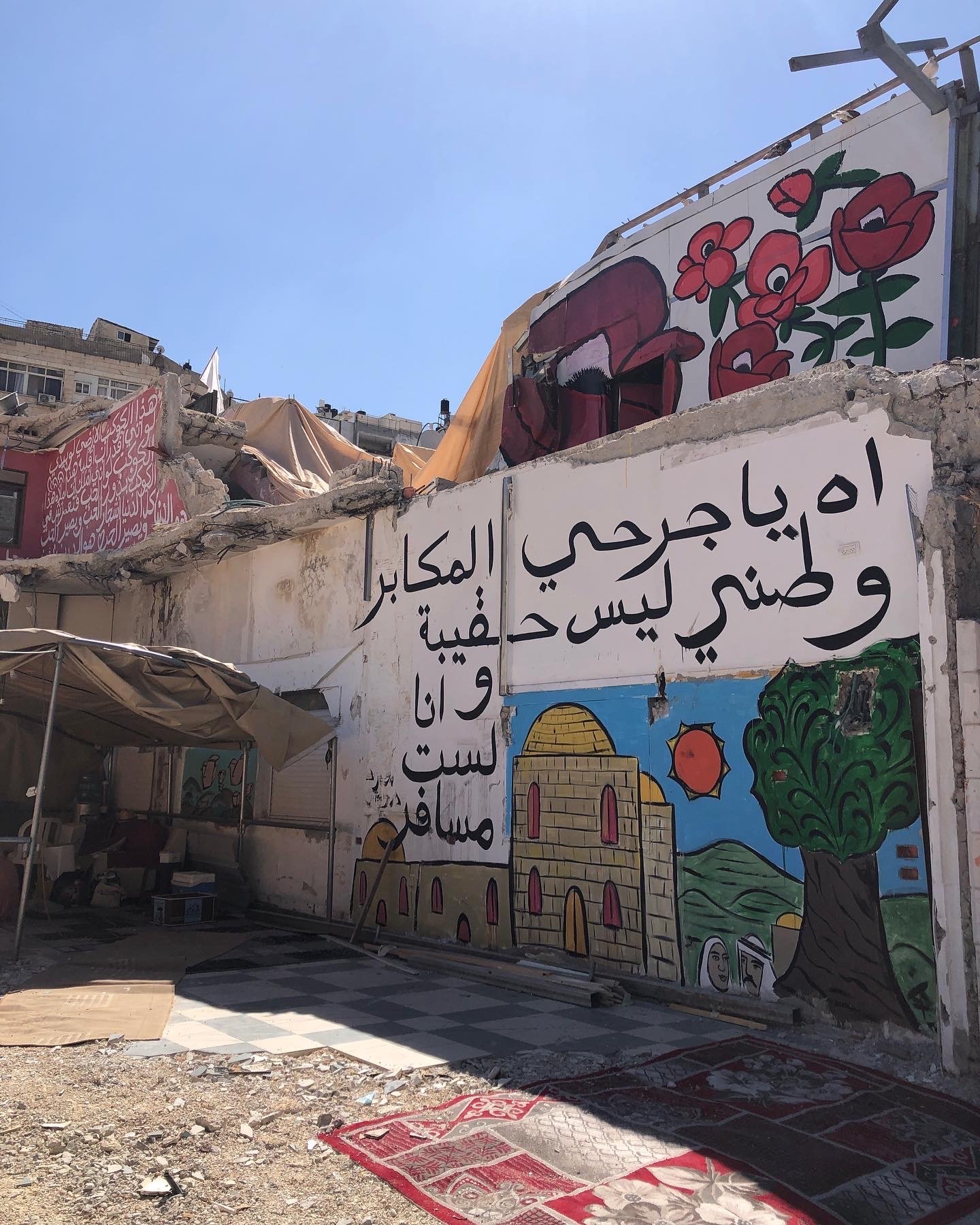
this mural by Palestinian-American artist Chris Gazaleh is part of a series our I Witness Silwan team created at the residence of the Rajibi family in Ayin a-Loza in Silwan, whom have already faced a demolition of their property and are waiting to hear the outcome for the rest of their home, which is unfortunately likely to also receive a demolition order. this is a story that happens far too often to families in occupied Palestine - it is the unjust ethnic cleansing of Palestinians from the land to make way for Israeli space - this has always been the goal of the institution of the state, which continues to propagate a Eurocentric, settler colonial agenda that from the beginning has sought to use others it oppresses to oppress the oppressed, and to separate people to enforce the suppression of any unified resistance against an entity made by and for the elites and that seeks to uphold Western hierarchies - sound familiar? the United States was founded on settler colonialism.
we must say no to apartheid and ethnic cleansing, and say yes to liberating Palestine. we are not free until we are all free.

هذا الكوكب الارضي / لو بيدي / لو اني اقدر ان اقلبه هذا الكوكب / لو اني املك ان املاه هذا الكوكب / بذور الحب / فتعرش في كل الدنيا / اشجار الحب / ويصير الحب هو الدنيا / ويصير الحب هو الدنيا
a rough translation: "this earthly planet, if I could.. if I could turn it, if I could fill this planet with seeds of love so that it would take root in all the world, trees of love - and love would become the world, and love would become the world," a quote by Fadwa Tuqan and illustrated by Chris Gazaleh in the neighborhood of Ayin a-Loza in Silwan on the remains of a home that was demolished just following Ramadan of this year. Fadwa is a symbolic poet in Palestinian history, who in her works speaks to Palestinians' endured suffering under occupation and societal repression, and also wrote in themes of life and death, family, love and nature. Fadwa was born in 1917 and passed away in 2003, but her legacy lives on and she is known as the 'Poetess of Palestine.'

hurriyah — it means freedom in Arabic! we finished a kids' mural with I Witness Silwan in the neighborhood of Batan al-Hawa in Silwan. painting is one method for palestinian community to have at least a little autonomy over their space in a state that suppresses it, and gives children the opportunity to feel engaged and hope for change. these visual images, also manifesting through powerful words like 'freedom', are the voice and yearning of the people, resiliently fighting for the end of the occupation and apartheid. these kids are truly little artists, we were able to finish most of the mural in one day.

"لَيْس سَهْلًا رُبَّمَا أَن أغيّر الْوَاقِع ، لَكِنَّنِي عَلَى الْأَقَلِّ كُنْت قَادِرَةً عَلَى إيصَالِ ذَلِكَ الصَّوْتِ إلَى الْعَالِمِ."
A quote by Shireen Abu Akleh, Allah yerhama, that roughly translates to: “It might not be easy to change reality but at least I was able to bring their (the people's) voices to the world."

Shireen, a Palestinian-American journalist, was fatally shot by the Israeli military at the entrance of Jenin Refugee Camp on May 11th of this year in spite of the fact that she and her colleagues were wearing helmets and bulletproof vests marked "Press." Residents of the Jenin Refugee Camp subsequently tried to evacuate Shireen as soon as possible, where they were met again with live fire. Once they arrived at the hospital, Shireen was pronounced dead. The State of Israel immediately denied any responsibility of the murder and claimed that she was instead shot by a Palestinian - several investigations by human rights organizations proved this not to be true and confirmed it was a member of the Israeli Occupation Forces. The United States also issued a statement that gaslighted the truth of the everyday reality for Palestinians on the ground, including journalists, and focused on intentionality rather than addressing the systematic oppression constructed and perpetuated by the State of Israel against Palestinians.
Dima Srouji, an architect and artist, wrote that Shireen was "A messenger, our collective tongue and vocal cords, [she] spoke with a cadence that is deeply embedded in our bodies. Immediately after she was killed, an entire generation relived the experience of listening to her speak, of hearing her words during one of the most traumatic moments - and seemingly never-ending and compounding experiences - in our history."
Shireen was taken too soon from this world and from the work for Palestinian Liberation, may she rest in power. And may Israeli Occupation and Apartheid end.
Pictured is Shireen's quote at the demolished home of the Rajibi family in the Ayin a-Loza neighborhood of Silwan. Our team painted several iconic Palestinian figures at the site including Shireen Abu Akleh, Naji al-Ali, Nizar Banat, Ghassan Kanafani, Fadwa Tuqan and Mahmoud Darwish.
sources: B'Tselem and +972 Magazine.

with the I Witness Silwan project, we began a series of murals on a 3-story building in the neighborhood of Ayin a-Loza in Silwan that was demolished on May 10th of this year by the Jerusalem Municipality and that was home to 45 people and a healthcare clinic. it is most nearly impossible for Palestinians to receive building permits and so many structures are built without permits to accommodate natural population growth and regular necessary repairs (the latter of which also require permits to conduct 'legally according to the Israeli government').
the owner of the structure, Sameer Rajibi, attempted to file a number of plans to get his construction approved but all were rejected. according to Sameer's son Faris, the municipality came to the house in the morning, "broke the doors, expelled us and didn't let us take any belongings." he said that the demolitions that take place regularly on Palestinian homes is not a matter of legality but a political one - "they don't give us permits anyway, and this is a policy of dispossession and ethnic cleansing." according to the Palestine Red Crescent, five Palestinians including a journalist suffered injuries from Israeli police brutality when the demolition took place.
the Rajibi family placed a white flag on top of another structure that was attached to the one demolished - in the photos you can see the exposed walls, rubble and electric wires at the site. Sameer Rajibi, known locally as Abu Faris, said the white flag symbolizes to his fellow Silwani residents that he is not a collaborator - he did not destroy his own house nor pay for its destruction; he had no part in the demolition that took place. in September, he and his sons and all of their families that lived together at the location will face a court hearing on the remaining structure and they are unfortunately very likely to face displacement and dispossession yet again.
resources: first-hand meetings with the Rajibi family, and articles published in Haaretz and the Middle East Eye.
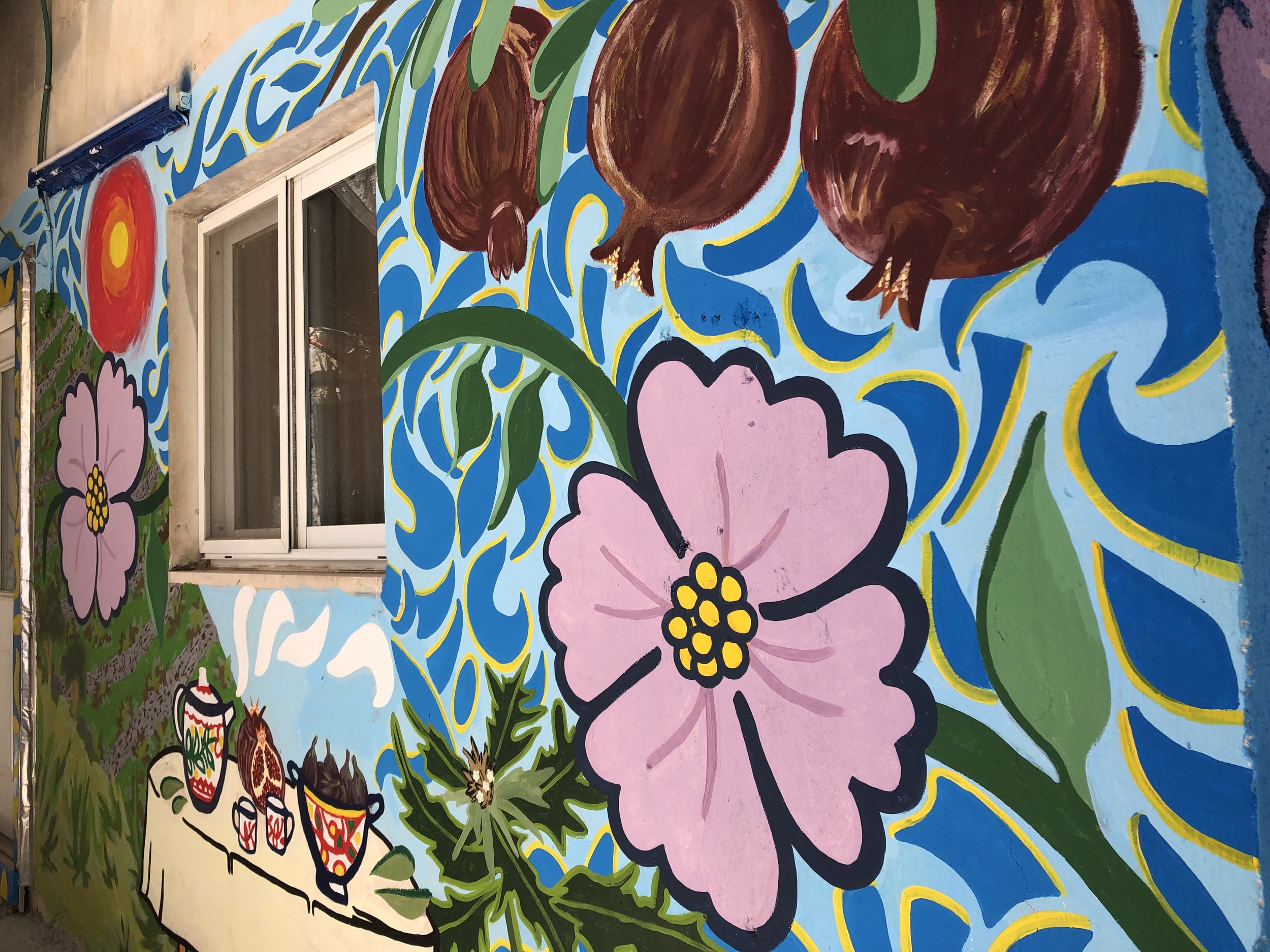
after about a week and half of work, we completed a mural at the home of Abu Seif in the Batan al-Hawa neighborhood of Silwan. Abu Seif asked for a beautiful mural on the outside of his home to bring his sister, who is ill and who he takes care of, to bring her some happiness. Abu Seif is such a kind elder of the community. he have us a lot of creative liberty and our result: the opportunity to create something a bit more detailed. this mural appears to be a painted piece of local pottery, drawing from Armenian and Hebronian designs. the mural features a landscape of the ancient agricultural terraces used in the region, and a landscape of the houses of Silwan where you can find cute lil hajjat mingling with one another. we also painted trees and plants indigenous to Palestine: pomegranates, figs, akoub. we also wanted to paint symbols of tradition and cultural heritage, so we included a table of tea, an everyday enjoyment and hospitality in Palestinian community, and a dove flying and holding in its mouth a string attached to a key - a symbol of Palestinian struggle for homeland and to return.

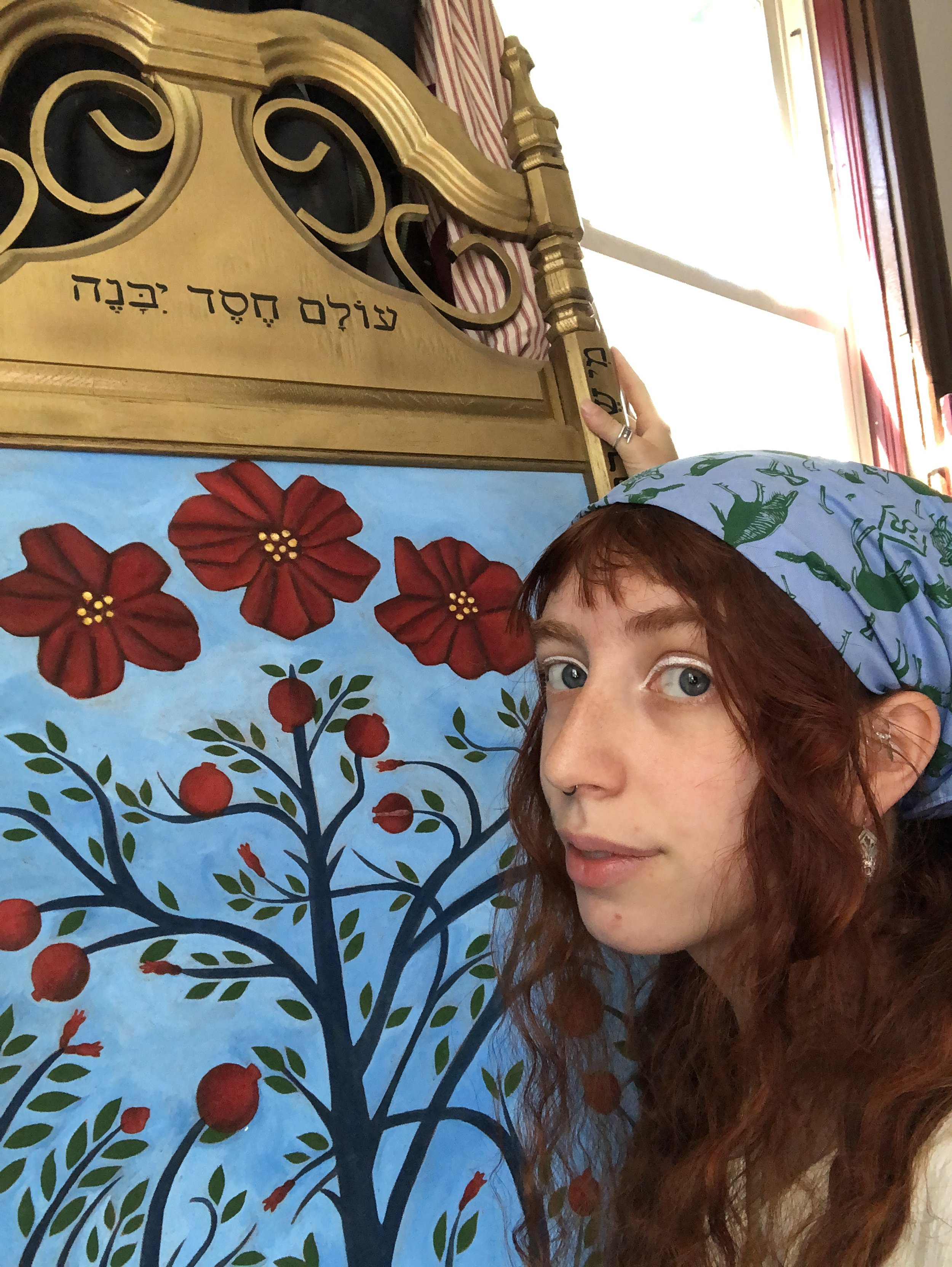
back in 2018 i created this panel (x2) as a way to process, & pay homage to those 11 dear souls lost in the tree of life *or l'simcha mass shooting that october in squirrel hill, pittsburgh's traditionally jewish neighborhood. according to @democracynow , there have been some 270 mass shootings in the united states since the beginning of 2022. when will there be legislation passed to ban military-style assault weapons? when will the gunning down of jews, black people, children and so many others be stopped? when will our communities be safe? i mourn those 11 lives lost, the 23 lost in buffalo, the 21 in uvalde, and countless other lives lost due to senseless violence. may there memories forever be for blessing.
last week i donated this panel to the memorial @treeoflifepgh is planning to build. the memorial will honor those 11 souls, those lost in the holocaust and others who lost their lives to other atrocities. the congregation also plans to make the temple's location on wilkins avenue into a museum and historic site that will tell the tragedy that took place on october 27th and also the history of antisemitism, specifically of the american kind, while helping visitors to recognize antisemitism and how act in defiance against it. it's about remembering, but it is also about taking action. you can learn more at rememberrebuoldrrnew.org, and i will also try to update here
shalom 🙏

صحة و عافية ✨
a few days ago I attended iftar in the village of Umm al-Khair in honor of Hajj Suleiman Hathaleen, allah yerhamo. @awdah.hathaleen and the village had invited several solidarity activists that have worked together in the movement for Palestinian liberation to join them. a very humbling gesture, I returned to the community gladly and with a big welcoming by its members. and together all of us sat down to partake in a meal together, and to share some words in remembrance of Hajj Suleiman.
when I decided to come to Palestine nearly three years ago in a commitment to do on the ground understanding, solidarity work and grassroots organizing initially with @humansofachvatamim I remember quite distinctly when we came to Umm al-Khair and listened to Awdah speak of his homeland, and what it means to come back to it and to protect what he and his community have from further dispossession and displacement. I remember being so inspired by the words Awdah spoke, a young man who had gathered up so much strength and resilience in spite of everything.
in a way this is in the virtue of Hajj Suleiman, who persevered in his engagement of nonviolent civil resistance, in spite of many arrests for his speaking out, and the attempted suppression and violence of the IOF and extremist settlers. I did not have the opportunity to meet Hajj Suleiman, but hearing Awdah and others in the community speak in such deep reverence to their community leader, I could and can still feel the elder's energy resonating, though of course also there is the sense of deep loss.
again I feel honored to work with the community of Umm al-Khair, especially in creating a mural in memory of Hajj Suleiman. the Israeli government and its partitioning of land has always been a means to fragment the Palestinian people by separating communities from one another. I was very happy that my wonderful friends and colleagues Jenan and Manar, Palestinians from Jerusalem, could also join in on this project with Palestinians from Massafer Yatta. I do really believe art is a mechanism to connect people and send a visual message in many different capacities. insha'allah we will create more with Umm al-Khair ❤️

feeling very humbled and honored to have worked with the immensely kind and hospitable village of Umm al-Khair, a Palestinian-Bedouin village in Masafer Yatta, near to Hebron, to create a mural in memory of their beloved elder, community leader and activist, Hajj Suleiman Hathaleen, Allah yerhamo.
Hajj was revered and his memory continues to be honored, knowing that not another soul exists like him in his bravery and commitment to nonviolent resistance against the occupation, by his village, throughout the neighboring hamlets of Masafer Yatta / the South Hebron Hills, Palestinians across this land, and many others standing in solidarity for Palestinian liberation. Hajj is remembered for his peaceful protesting, his resilience and his ability to speak out against the crimes perpetuated against his people, calling for justice.
@awdah.hathaleen , a young community leader, activist and English teacher of 27 in Umm al-Khair, speaks lovingly of Hajj, who was like a father to him. he shared his idea to create a painting in honor of the elder's legacy with Tess Miller, who helped to initiate this project. thank you to @sam_avraham for organizing a fundraiser to cover the cost of paint, brushes and other materials - and a thank you to all that donated to preserving the memory of a special leader. it's important to thank many people in this collective effort to create Hajj's mural - the village of Umm al-Khair for their openness, welcoming, and seeing the power of art; @j0j0gramz & Dolev Assaf for assisting with transportation to Masafer Yatta from Jerusalem; @iwitness_silwan , the project in which I've been working with for the last 2.5 years, for providing support; @emilyglickphoto for photographing this project; and lastly - a big big thank you to my friends and colleagues who assisted in the implementation and painting of Hajj's mural - @jenanmaswada , @manar.tamim97 & @justtrashbeautiful
please share in memory of Hajj Suleiman Hathaleen & support the community of Umm al-Khair by speaking out and resisting unjust home demolitions and violence.
#saveummalkheir #savemasaferyatta #hajjsuleiman #stophomedemolition

stop demolitions of homes in Jerusalem! this morning at Safra Square, Palestinians led a peaceful demonstration outside of the Jerusalem municipality in the ongoing and unjust displacement of Palestinians from the historically diverse city. this community specifically represented the neighborhood of Jabal al-Mukaber, where 800 Palestinian homes face demolition orders. speakers at the demonstration in order: Palestinian Knesset member Ahmad Tibi, a local Israeli activist, a local Sheikh / religious leader, and Israeli Knesset member Ofer Cassif.
apparently, the municipality plans to build a commercial center and 500 housing units for Israelis in place of the Palestinian homes. in spite of natural population growth, Palestinian construction is extremely restricted by the Jerusalem municipality, with less than 30% of building permits granted over the last 30 years were in Palestinian neighborhoods, although Palestinians account for about half of the city's population, according to Peace Now.
the Jerusalem municipality's efforts to displace and force Palestinians from their homes is unjust and a form of ethnic cleansing.

on Thursday last week, @manar.tamim97 @jenanmaswada & I visited Sheikh Jarrah to speak with and interview several community members who are facing displacement and state and settler violence. Fatma, the matriarch of the Salem family, was up most of the night with the rest of her family during what seems like endless intimidation from the IOF and Zionist extremists. Fatma was very tired and has sustained a hand injury after a settler cut her with a knife, but yet welcomed us into her home warmly and sat down to speak with us for some moments to talk about recent events, her story and the power of art. we also spoke with other community members like Um Ibrahim and Um Ramadan. our goal is to elevate their voices so that people know the reality if what is happening to Palestinians in Sheikh Jarrah ahead of March 1, which is the earliest date the Salem family could be evicted from their home, chas v'chalila. stay tuned for interviews with the community members. also the last slide is a photograph of the white dove that never leaves Fatma's side 🕊
@iwitness_silwan @artforces #savesheikhjarrah #savesilwan #freepalestine #powerofart

while in Umm al-Khair, we were greeted by Um Salem, who welcomed us and took us to sit down with other women of the community. Um Salem told us that a year ago her leg was broken by a settler. she spent 55 days in a cast and her leg has still not completely healed. Um Salem explained that years before, her community was allowed to build and had the money to do it. today, bulldozers accompanied by Israeli forces are a common sight in Umm al-Khair and basic structures for living are repeatedly demolished. when they came to demolish Um Salem's home five years ago they did it in the early hours of the morning - 5AM. the occupation tends to evict families and demolish homes at times of intensified vulnerability for Palestinian community, like in the middle of the night or during bad weather for example. at the end of January, the Salihiya family of Sheikh Jarrah was forced from their home in the early morning during one of Jerusalem's coldest days - with rain and impending snow.
the Israeli settlement of Carmel is situated next to Umm Al-Khair - Um Salem explained the lands upon which the settlement now lays used to be those of the Hathaleen tribe. she also mentioned Regavim, which is a racist pro-settler Israeli organization that utilizes the Israeli court system to undermine Palestinian communities by citing their lack of Israeli permits for construction - those of which are seldom given to Palestinians who do apply for such. Um Salem said that settlers used to try to prevent visitors from accessing the village, by stopping them at the entrance and questioning them. today, the settlers are afraid to some degree of the presence of international volunteers in Umm al-Khair. yet in spite of this support, Um Salem expressed a dire need for people to accompany shepherds across the lands because of the brutality with which they are faced by extremist Israeli settlers. she asks for volunteers to come and help document this unjust violence.
this is the harsh reality that the people of Umm al-Khair, and many other across this land, experience daily. and even so, Um Salem was able to make little jokes, and laugh. the other women laughed and smiled too and so, so did we - myself, manar, jenan and josie. it's in these moments, that I see again and again among the Palestinian people an unmistakable and profound resilience.

we visited the Bedouin village of Umm al-Khair to speak with community leader Awdah Hathaleen about creating a collaborative mural in memory of the late 73 year-old Palestinian activist Hajj Suleiman Hathaleen, Allah Yerhamo. the village is located in Masafer Yatta (also referred to as the South Hebron Hills) in Area C of the West Bank. the Hathaleen tribe situated themselves on the land after they were forced off of their lands in al-Arad in 1948. the community faces imminent demolition orders on its structures, and its shepherds constantly face the brunt of settler violence.
a revered elder of Umm al-Khair and across the Hebron governorate, Hajj Suleiman was fatally injured on January 5 when an Israeli tow truck ran over him during a raid of the village by Israeli forces to seize unregistered vehicles. he was taken by a private vehicle, due to lack of ambulance services, to the nearest medical center 15 km away. he unfortunately died of his injuries 12 days later. Hajj Suleiman is remembered for his peaceful protesting, his resilience and his ability to speak out against the crimes perpetrated against Palestinians.

this is Fatma, otherwise known as Um Salem, who lives with her children and grandchildren in the house she was born in in Sheikh Jarrah over 60 years ago. she and her 10 other family members in the home were set to be evicted on 29 December 2021, which has been delayed and is likely to be reissued in January 2022. the reality of preventing this expulsion has a low chance, as the Jerusalem courts have rejected the residents' appeals. the Salem family is one of 17 families that are facing eviction orders in Sheikh Jarrah out of the 45 Palestinian families that live there.
the eviction notice was handed to Um Salem by right-wing member of the Jerusalem Municipality Yonatan Yosef, who claims he bought the rights to the land from a Jewish family that lived in the home before 1948. in 1951, the Salem family was displaced from their original homes during the ongoing Nakba when they moved into their current home in Sheikh Jarrah. the eviction order handed to the family is signed by the Justice Ministry, which serves as a final say in this Israeli legal process.
but I ask, where is the 'justice' in evicting this family from their home of decades? and those of countless other Palestinians across this land? we unfortunately often know of the 'legal system' that fails to offer justice to all people. here, it is clearly that based on Jewish privilege, at the expense of Palestinian livelihoods. Jewish liberation does not come through the oppression of Palestinians.
images in this post depict a solidarity action mural painting project with the Salem family, @free_jlm , @iwitness_silwan & @atlcol that took place on 27 December 2021. photos taken by @edithgeuppert
#savessheikhjarrah #savethesalemfamily #savesilwan #savejerusalem #endtheoccupation #stopdispossession #endapartheid